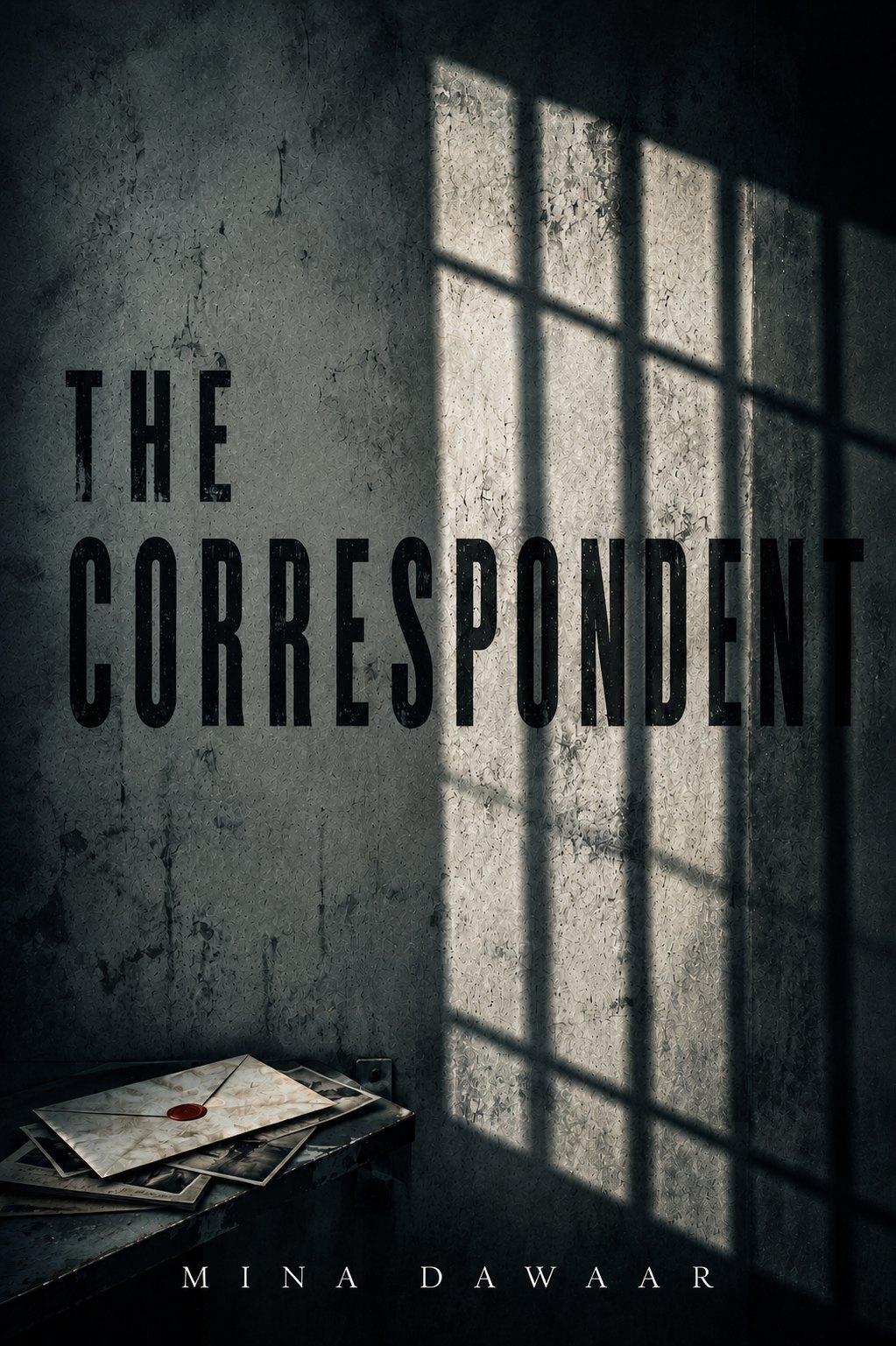
The referral came in on paper, which almost nobody did any more.
It was a single sheet in an envelope addressed to Helen by name, from a family doctor in Guelph called Sandhu whom she had never dealt with and could find no record of having corresponded with. It said that a forty-six year old woman had asked to be seen by Dr Moore specifically, having read her work, and that in his view she would benefit. It gave a history of two lines. The medication list was empty, which was unusual enough that Helen read it twice.
No current prescriptions. No previous psychiatric contact.
Forty-six years old and never seen anybody. That happened, and when it happened it was usually because something had finally become intolerable, and the something was generally not the thing the patient led with.
She put it in the tray and it sat there for nine days, because March was March: two people off with the same virus, a locum who needed watching, and the annual business of the insurance renewal, which Ruth handled and complained about and would not delegate.
Priya booked her for the eleventh at three.
* * *
She came in with her coat over her arm and stood just inside the door until Helen said to sit anywhere, and then took the chair by the window rather than the one nearer the door, which perhaps one patient in five did.
Helen gave her the first minute.
The bag went down on the floor by her left foot inside ten seconds, a soft gray thing with a fold-over top. Then she sat back properly with both feet flat on the carpet and put her hands open on her knees, and that was that. No adjusting. No handbag on the lap and then on the floor and then on the lap. Most people spent five minutes finding a shape and some of them never found one at all.
“Marion Craig,” she said. “Everyone says Nora.”
“Which would you prefer in here?”
“Nora, if that’s all right.”
Helen wrote it down.
She did the frame first, the way she had done it several thousand times and the way she still made registrars do it in full, because the ones who abbreviate it spend the following year dealing with the consequences. What the hour was. What it cost, and when, and that Priya dealt with all of that and Helen dealt with none of it. How many of these there might be before either of them could say anything sensible about how many there might be.
Then confidentiality, and its limits, which she gave properly rather than in summary.
“There are three circumstances where I would have to tell somebody something you’d said in here,” she said. “I’ll go through them, because people generally imagine the limits are wider than they are and then don’t say things.”
Nora listened to all of it without interrupting.
That was itself a finding. Perhaps a fifth of people interrupted the confidentiality section, usually to say something reassuring about how they had nothing to hide, which meant they had understood exactly what was being described and had found it uncomfortable.
At the end she asked one question.
“What happens to the notes if the practice ever closes?”
“They’d transfer under the retention rules. There’s a period we’re obliged to hold them for and then it’s governed, and if we closed we’d have to arrange a receiving practice or a proper archive. It isn’t a thing where somebody puts a box in a garage.”
“Right,” Nora said. “Sorry. That’s a strange thing to lead with.”
“It isn’t. It’s the second most common question I get.”
“What’s the first?”
“Whether I take notes at all.”
“Do you?”
“Not while you’re talking. Afterward, for about ten minutes, and they’re duller than you’d think.” Helen put the pen down on the side table. “So. Tell me why you rang a man in Guelph and asked for me by name.”
Nora took a breath and let it out.
“I read a paper you wrote. About people who turn up eleven or twelve years after the thing that happened to them and can’t work out why they’ve come now.”
Helen sat back.
“That’s a very small paper,” she said. “It was in a very small journal and it was eleven years ago and I’ve had two people mention it, one of whom was my co-principal, who was being kind.”
“I know. I had to write to the library at Western.” Nora almost smiled. “They wanted twelve dollars and a reason.”
“What reason did you give?”
“I said I was interested in the subject.”
“And are you?”
“I’m one of them. I think.” She looked at her hands. “That’s the whole of what I’ve got. I read it and I sat in the kitchen with it and I thought, that’s me, and then I spent about four months deciding whether that was a good enough reason to ring anybody.”
“Four months is a long time.”
“I’m thorough,” Nora said.
* * *
What she talked about for the next thirty-five minutes was a flat on Bronson Avenue in Ottawa, and a man she had lived in it with for two years when she was twenty-four.
He had never hit her. She was clear about that early and did not offer it defensively; she offered it the way you rule out a diagnosis, to get it off the table so the actual thing could be looked at. He had never threatened her. He had never stopped her doing anything, or taken her money, or been unpleasant to her friends, most of whom had liked him.
What he had done, across twenty-four months, was take away her ability to be certain about anything she had seen with her own eyes.
“He’d remember things differently,” she said. “Not big things. Whether we’d agreed to go somewhere. What his mother had actually said. Whether I’d been in a mood on a particular Sunday. And he was never angry about it, he was patient, he’d sort of walk me back through it, and by the end of the walk I’d think, oh, all right, I’ve got that wrong.”
“Every time?”
“Not every time. That’s the thing.” She looked up. “If it had been every time I’d have got out in six weeks. It was about one in five. So four times out of five my memory worked perfectly well and the fifth time it turned out I’d invented an entire conversation, and after two years of that you stop being able to tell which sort of time you’re in.”
Helen listened to it the way she had been taught to listen to a first session, which is with about a third of the attention on the content and two thirds on everything else.
The everything else came back clean. There was no rehearsal in it that she could hear, and she had a good ear for rehearsal. The affect matched the material. The flat bits were flat and the two places where it caught were places that would catch. The chronology held under two small checks Helen dropped in without signaling. And twice Nora had stopped to correct herself on a detail that did not matter, once about the month she had moved into the flat and once about the name of a street, which people who are inventing do not usually bother to do.
“When did it end?”
“When I was twenty-six. He got a job in Halifax and I didn’t go.” Nora shrugged. “That’s the humiliating part, actually. I didn’t leave. I just wasn’t quite invited.”
“And afterward?”
“Afterward I was fine.” She said it with the flatness of a sentence that has been said many times. “That’s what I’d like to talk about. Because I was fine for twenty years and now I’m forty-six and I can’t make a decision about a coat.”
* * *
At ten to four Helen said they were nearly out of time, and asked whether there was anything else she should know before they finished.
“My husband died,” Nora said. “Some years ago. I’d rather not do that today.”
“That’s fine.”
“It isn’t connected.”
“You don’t have to decide that this afternoon either.”
Nora looked at her for a second and a half with an expression Helen could not place and did not chase, because you do not chase anything in the first hour.
“No,” she said. “All right.”
She stood, and picked up the bag, and put her coat on at the door, and asked whether the same time next week would suit.
* * *
Helen wrote it up in nine minutes.
46. Self-referred via GP Guelph (Sandhu), specifically requested. No prior psych contact, no meds. Presents: late-onset difficulty with decision-making and self-trust, dating to coercive relationship aged 24 to 26, Ottawa. Good historian. Affect congruent. No current risk indicators elicited. Bereaved, spouse, timing not given, declined today. Agreed weekly.
She read it back and added one line, because it was true and because you write down what you notice.
Presentation unusually well-organized for a first appointment.
Daniel Bell had been dead for seven years and five months, and Helen thought about him most days in the way you think about a room in a house you no longer live in.
That is the sort of sentence she would have taken apart in a patient. She knew exactly what it was doing. It made the thing sound weathered and general and slightly wistful, and it was none of those.
Here is what was actually true, in the order it had happened.
She had treated him from October 2016. He had been thirty-eight when he came and thirty-nine when he died, and he had come with a depressive illness that had not responded to two adequate trials, and a marriage he described as finished.
She had begun a sexual relationship with him in March 2017, in that room, at ten to five on a Thursday, and she had begun it. He had not. She had said three words she had chosen, and had watched him understand them, and had not taken them back in the four or five seconds available for taking them back.
It had run seven months.
He had killed himself on the fourth of October 2017. The finding had never been in any doubt at any point, and she had not for one hour of eight years permitted herself the small comfort of wondering whether it might have been something else. There are people who take that comfort. She had sat with two of them professionally and had watched what it cost them, and had decided very early that she was not going to have it.
And in the November, seven weeks after his death, at twenty past eight on a Tuesday evening, she had opened his file and overwritten the entry for the twenty-fifth of September.
That last one was the one nobody knew.
* * *
The affair, if it ever came out, would end her.
She understood the mechanics of that better than most people in the profession, because Ruth did the medico-legal work and Helen had read enough of it over twenty years to know how these things actually run. It is not a matter of degree. It is not a question of whether the patient was competent, or willing, or thirty-nine, or in love, and it is not a question of what any reasonable person would conclude about the eleven months.
There is a finding. Where the finding is made, the outcome follows. There is no discretion anywhere in the process and there is no route by which a person who volunteers it fares better than a person who is caught.
She had known that in 2017. She had known it on the Thursday in March, in the four or five seconds.
But the affair was a thing she had done, and things people do can at least be described. There is a vocabulary for it. There are papers about it, one of which she had cited, back when it was a category of professional failure that happened to other people.
The entry was different. The entry was a thing she had kept, and then unkept.
In twenty-six years she had never once heard that discussed at a meeting, or in a corridor, or in the pub afterward where the real discussion happens.
* * *
The current entry read:
Mood reactive. Sleep improved on current regimen. No active plan elicited. Continue weekly.
Four lines. She had written them in about ninety seconds and had not been able to look at the screen while she did it, which was not a figure of speech; she had typed the last line with her eyes on the window and had had to go back and correct a word.
What had been there before was a page and a half.
She could have produced it, then. In 2018 she could have written it out from memory and it would have been close. In 2019 she could have got most of it. At some point around 2020 she had discovered that she could no longer attempt it without the immediate suspicion that she was improving it as she went, softening one clause, sharpening another, and she had stopped trying, and had understood that the stopping was itself final.
Nobody had ever asked her about it. There was no reason for anybody to ask. The system had kept a line saying the entry had been amended, and the date, and her identifier, and that line had sat there for eight years being read by nobody at all.
She had told herself she did it to protect her license.
That was true, and she had never gone underneath it.
* * *
She had got very good at not being a woman who thought about this.
It was a skill, and like most skills it consisted mainly of not doing certain things. She did not open his file. She did not go to the conference in Ottawa in the spring because the person running the session on boundary violations had been at her training scheme. She did not read the College’s disciplinary summaries when they came round, and she had a form of words about that too, which was that they were depressing and that everybody skipped them, and everybody did skip them, and that was not why she skipped them.
Twenty-six years of clinical practice is largely a matter of noticing what people avoid.
She thought about all of this on the eleventh of March, driving home from a first session with a new patient who had asked, unprompted, in the first fifteen minutes, what happened to notes when a practice closed.
Then she stopped thinking about it, because she was good at that too, and by the time she got to the lights at Erb Street she was thinking about something else entirely.
The sample ends here. The full novel is available now.
Use the arrows or your keyboard to turn the page